
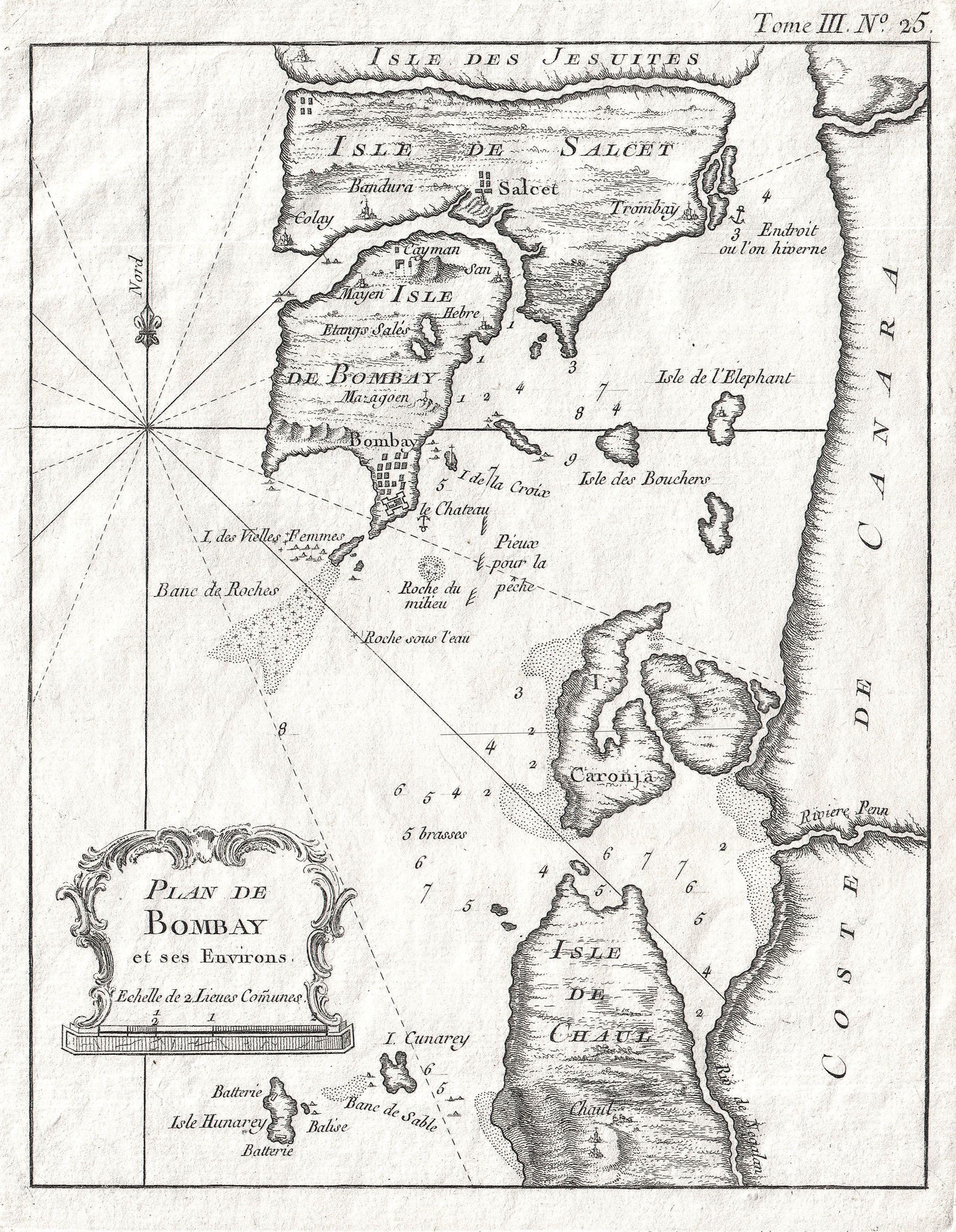
The islands of Bombay were not a priority for Portugal. When Catherine of Braganza married King Charles II of England in 1661, they gave Britain the seven islands of Bombay as part of the dowry. Even so, Bombay’s potential remained untouched till 1668, when Charles II leased the islands to the East India Company for £10 a year.
From then on, the East India Company began developing basic infrastructure and fortifications. In 1672, Gerald Aungrier became president of the Surat factory and Governor of Bombay. He encouraged skilled workers and traders to settle in Bombay, and by 1675, the population of Bombay skyrocketed. He also planned extensive fortifications, although construction only began in the early 18th century.
Meanwhile, tensions were rising in Surat, which housed the company’s main holdings. By 1687, the company decided to shift its naval force from Surat to Bombay because of Bombay’s strategic location and natural harbour. By the end of the 17th century, Bombay was set to become a major trade centre.
In 1715, Charles Boone became Governor and executed Aungier’s plans for fortification. He built St. Thomas Cathedral within the fort and developed the Marine Force. The city also became a centre for shipbuilding. Dock expansion stimulated trade and led to an influx of migrants from all over the world.
Maratha expansion in the 1730s prompted Bombay to reinforce its defences. From 1746, workers made major improvements to the Fort, including new batteries and bastions. The Fort had three main gates: the Apollo Gate, the Church Gate, and the Bazaar Gate. In 1772, an order divided Indian and English residences, with Europeans staying within the fort and Indians outside.
The First Maratha War (1772–75) soon followed. Eventually, British control over Bombay was solidified in 1782 with the Treaty of Salbai, when they ceded some land to the Marathas.
In these relatively peaceful times, the British began planning many urban development projects. The Hornby Vellard reclamation project (completed in 1784) connected Bombay to Worli and mitigated flooding. By the end of the 18th century, a structured civil administration had been established as the city continued to expand.
Discover more from A Little Bit of Existence
Subscribe to get the latest posts sent to your email.

