
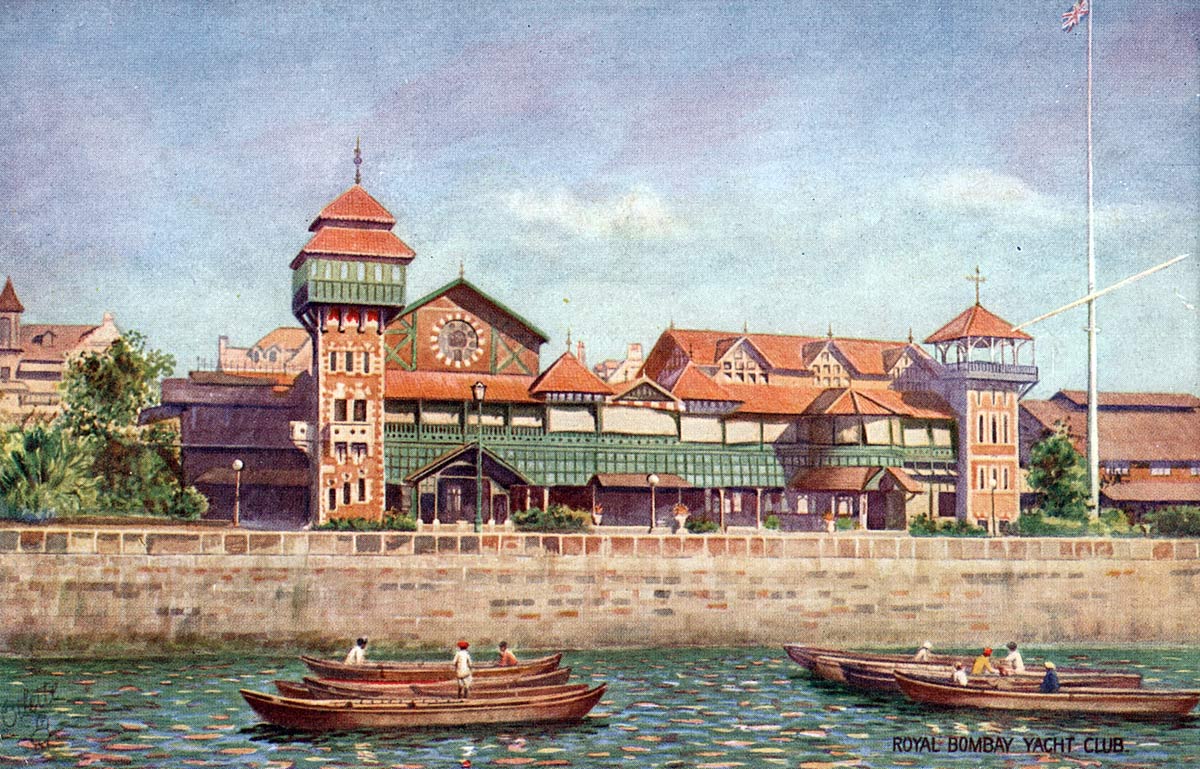
Only a few hundred metres away lies the endless expanse of the Arabian Sea. In this corner of the world, it ebbs and floods through the harbour as boats bob on its waves. From where we stand, the sea is flanked by an enormous sandstone structure on one side and an extravagant hotel on the other. The air smells like salt and petrol. Sounds of traffic and tourists nearly drown out the crashing waves, but not quite. We are at the Royal Bombay Yacht Club.
This building was not always home to RBYC. Founded in 1846, the Royal Bombay Yacht Club occupied a prime seafront location with direct access to Bombay Harbour. British officials and elites established RBYC as a gentlemen’s club. The club embodied the social hierarchy and racial exclusivity of colonial rule. It was one of the places where signs reportedly read, ‘No Dogs or Indians Allowed.’ Even after Independence, the club retained associations with privilege.
It also became a celebrated centre for yachting in India.
Much later, as India’s atomic research programmes expanded, the Indian government requisitioned the seafront clubhouse, and the club moved into another building it owned.
The government initially planned to demolish the clubhouse and construct a new building in its place. As news spread, people across Mumbai united to protest the destruction of the structure. Their efforts eventually led to the creation and implementation of the city’s — and the country’s — first city-level heritage conservation legislation.
As a result, the original RBYC building still stands, now housing something else, as a reminder of the bitter truths of colonial rule and an ode to the sense of community that holds together one of the largest cities in the world.
Discover more from A Little Bit of Existence
Subscribe to get the latest posts sent to your email.


